
Meet · 6 minute read
What Is an AI Pet? A Practical Guide to AI Companion Robots
An AI pet is a small digital or physical companion designed for conversation, expression, and an ongoing sense of character. The best ones feel less like another app and more like an object with a recognizable personality.
Updated August 20, 2026
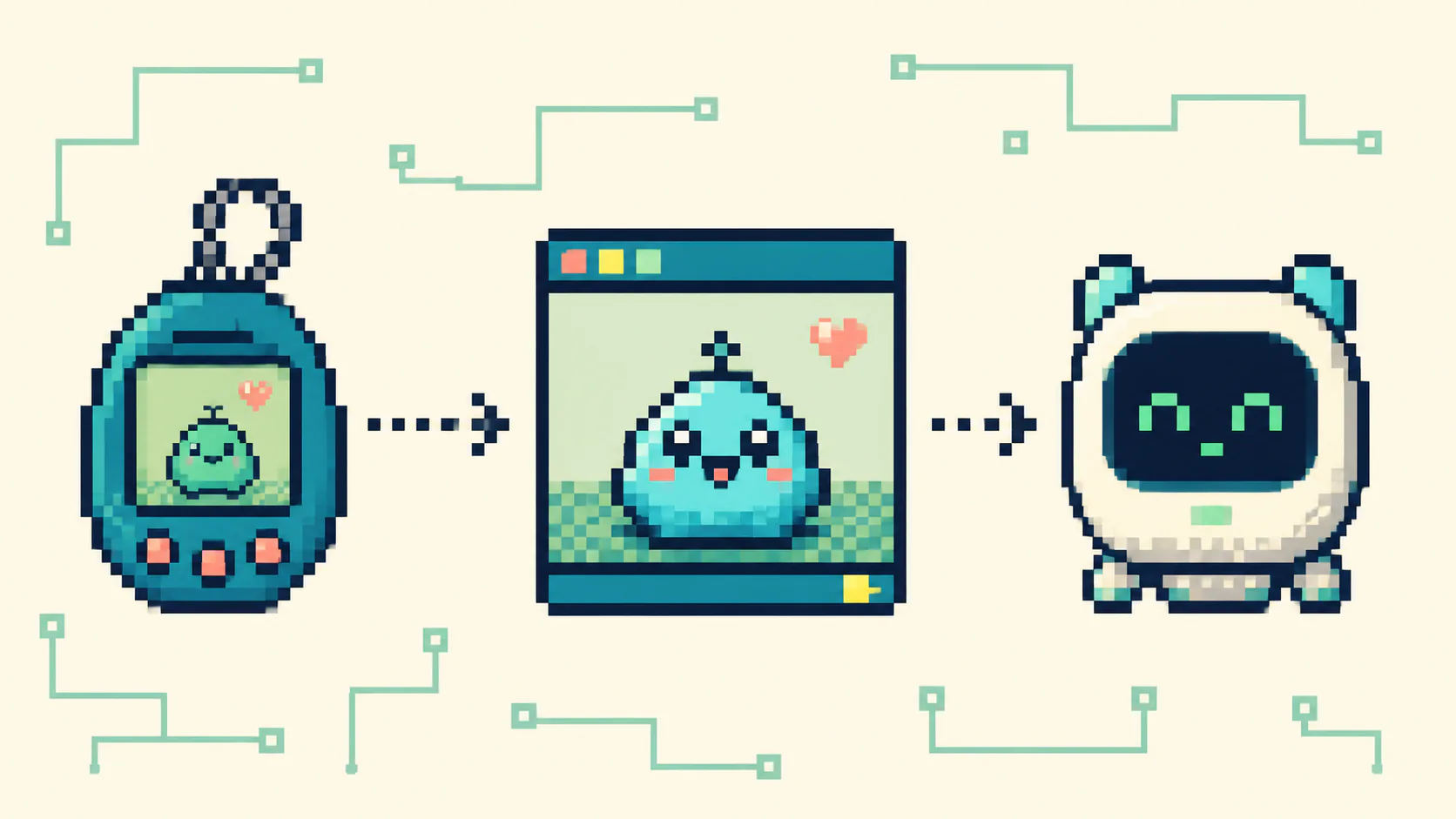
AI pets combine character, memory, and a body
A traditional virtual pet asks you to feed it, clean it, or keep a status meter full. An AI pet can also hold a conversation, react to what you say, and keep a consistent speaking style. A physical AI pet adds a body: a face, speaker, microphone, buttons, touch sensors, or motion sensors that make the interaction feel present in a room.
That body matters. Reaching for a small companion on a desk is a different experience from opening a general-purpose chatbot. The interaction has a clear beginning and end, and the pet can communicate through timing, sound, and expression instead of a scrolling feed.
How is an AI pet different from a chatbot?
A chatbot is usually built to answer almost any question. An AI pet is intentionally narrower. Its identity, voice, boundaries, favorite topics, visual expressions, and response length work together as one character. Good character design makes those choices predictable without making every answer repetitive.
AI pets can still use capable language and speech models, but the product is the relationship with the character—not access to a blank text box. That is why personality controls and clear boundaries are as important as model choice.
- A persistent name, voice, face, and speaking style
- Short interactions designed around speech and expression
- Memory that can be reviewed, edited, or removed
- Visible controls for quiet hours, topics, and safety boundaries
What can an AI companion robot do?
Common uses include a cheerful desk companion, a language-practice partner, a bedtime storyteller, a focus coach, or a character that families create together. A maker-friendly AI pet can also be a platform for experimenting with voices, prompts, sensors, and animation.
An AI pet should not pretend to be human or replace medical care, childcare, or real relationships. The useful role is smaller and more honest: a responsive character that makes a routine warmer, sparks curiosity, or gives someone a playful reason to speak out loud.
What to look for before choosing one
Ask where conversations are processed, whether audio is stored, how memory works, and which settings you can control. Also look at the everyday details: Does the device return to idle reliably? Can you stop a response? Can you change volume and quiet hours? Does it still feel pleasant when the network is unavailable?
For AI Pets, the physical device handles touch, recording, playback, and the animated face while a protected cloud service runs the voice and intelligence pipeline. Audio is processed for the turn and is not stored. Character settings and memories live in the owner-controlled cloud admin so they can be inspected and changed.